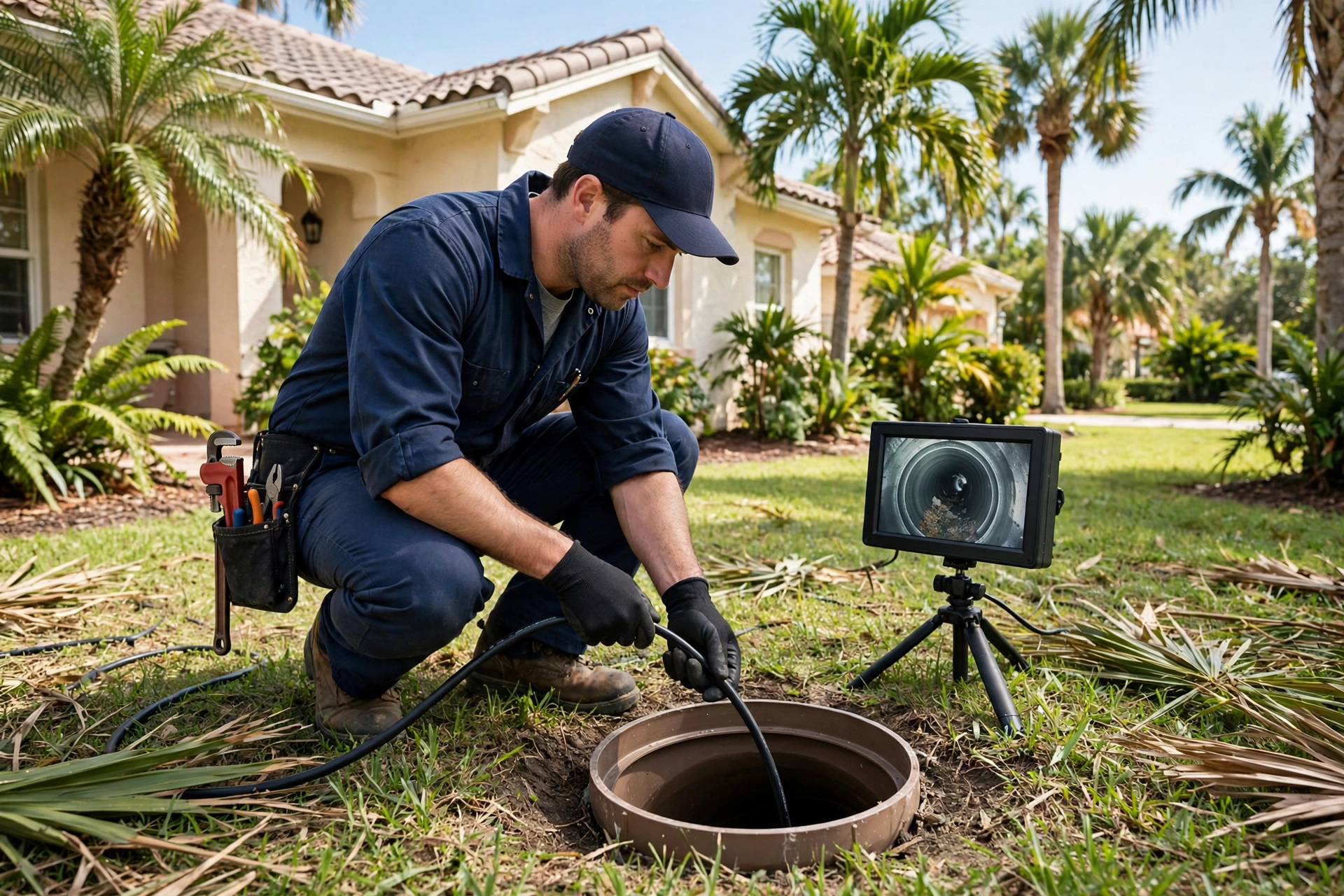
A drain snake clears blockages. A sewer camera finds the cause of the blockage. The snake pushes through roots, grease, and paper to restore flow, but it cannot show whether the pipe is cracked, bellied, offset, or collapsing, and it cannot tell you where the problem sits. The camera records all of that on screen, with the location marked above ground, so the repair matches the actual defect instead of the guess.
What a Drain Snake Actually Does
A drain snake is a steel cable with a cutting or boring head on the end. Fed down a drain or through a cleanout, it spins and chews through whatever is blocking the pipe: a wad of paper, a grease plug, a mat of hair, a root mass that has grown through a joint. When the head breaks through, water flows again. For a simple clog near a fixture, it is fast, it works, and there is nothing wrong with it.
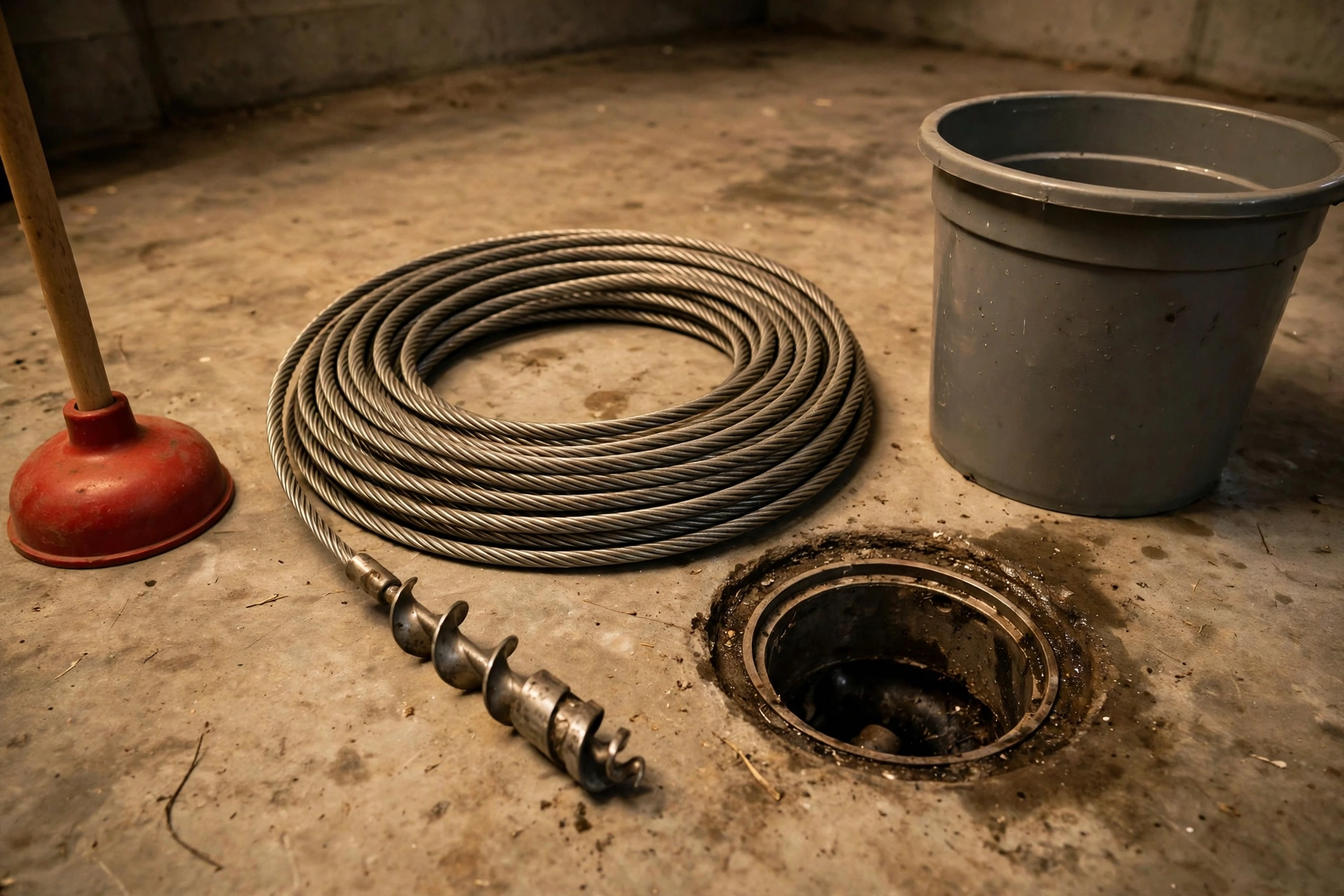
The limit is what the operator can feel. A snake tells you where the cable meets resistance and how hard it pushes back. It cannot tell you what the resistance is. Roots feel like a belly. A belly feels like roots. A collapsed section feels like a hard stop, and so does a sharp offset joint. The snake clears a path through the blockage, then comes back out. Whatever caused the blockage stays in the ground, and the clock on the next clog starts the moment the cable is coiled up again.
That is why the same drain keeps clogging. The snake did its job. The job was never the whole problem. If you are calling for drain clearing more than once or twice a year for the same line, the clog is a symptom, and clearing symptoms on a schedule is the most expensive way to own a sewer line.
Snake vs. Camera: What Each One Can Do
Put side by side, the two tools barely overlap. One clears. The other looks. Homeowners get into trouble when they expect the clearing tool to do the looking, and pay for the same clearing three times before anyone looks at all.
| Question | Drain snake | Sewer camera |
|---|---|---|
| Clears the immediate clog | Yes, it cuts through roots, grease, and paper | No, the camera only looks |
| Shows the pipe's condition | No, the operator feels resistance, not damage | Yes, cracks, breaks, and corrosion on screen |
| Finds the exact location | No, depth and distance are a guess | Yes, a locator marks the spot above ground |
| Explains repeat clogs | No, it clears the same spot again | Yes, the cause is visible in the footage |
| Guides the repair choice | No | Yes, lining, bursting, or digging follows what the camera found |
| Leaves a record | No | Yes, footage and a written summary |
The row that matters most is the third one. A repair without a location is a guess with a shovel. With the camera, the crew knows the defect, the depth, and the distance from the cleanout before anyone digs. That is the difference between a spot repair at the right place and a trench that starts in the wrong one.
The Five Things a Camera Finds Most Often in Bradenton
Every line is different, but the footage in this county keeps showing the same five problems. If your home is older, or your yard has big trees, or your soil is the pale sand this part of Florida is built on, one of these is probably already in your lateral.
- Root intrusion. Live oaks and other large trees send roots toward the moisture leaking from tiny joint gaps. The roots enter as thin threads and grow into a mat that catches paper and slows flow. Cutting them with a snake clears the mat, and the roots grow back through the same opening, usually thicker. See why tree roots keep coming back for the full picture.
- A belly, or sag. A section of pipe that has sunk below grade holds standing water. Solids settle in the low spot, the pipe clogs from the inside out, and the snake clears the settled material without ever touching the sag. Bellies are common where Florida's sandy soil shifts under a line.
- Offset joints. Soil movement pushes one pipe section out of line with the next, leaving a lip inside the pipe that snags paper and wipes. The snake slides past the lip. The camera shows the step, and the step explains the repeat clogs.
- Scale and corrosion in cast iron. Older cast iron lines grow rough scale on the inside until the bore narrows and the walls thin. Snaking scrapes some scale loose and leaves the rest. The camera shows how much bore is left, which decides whether the line can be lined or needs replacing. See how long sewer lines last by pipe material.
- Cracks and collapsed sections. Age, heavy loads above, and storm-driven ground movement crack pipes and, in the worst case, drop a section entirely. A snake cannot pass a collapse, and the place where the cable stops is the first real clue. The camera shows whether the pipe is cracked, crushed, or gone.
How a Camera Inspection Works, Step by Step
There is no digging involved in looking. The whole inspection happens through access points your line already has, and you watch it happen.
- Access through the cleanout. The technician opens the cleanout cap, usually a white pipe stub in the yard or near the house wall. If the home has no cleanout, the camera can go in through a pulled toilet instead.
- The camera rides a flexible cable. A small waterproof camera head travels the full length of the lateral, from the house to the public main, while the technician feeds the cable in by hand.
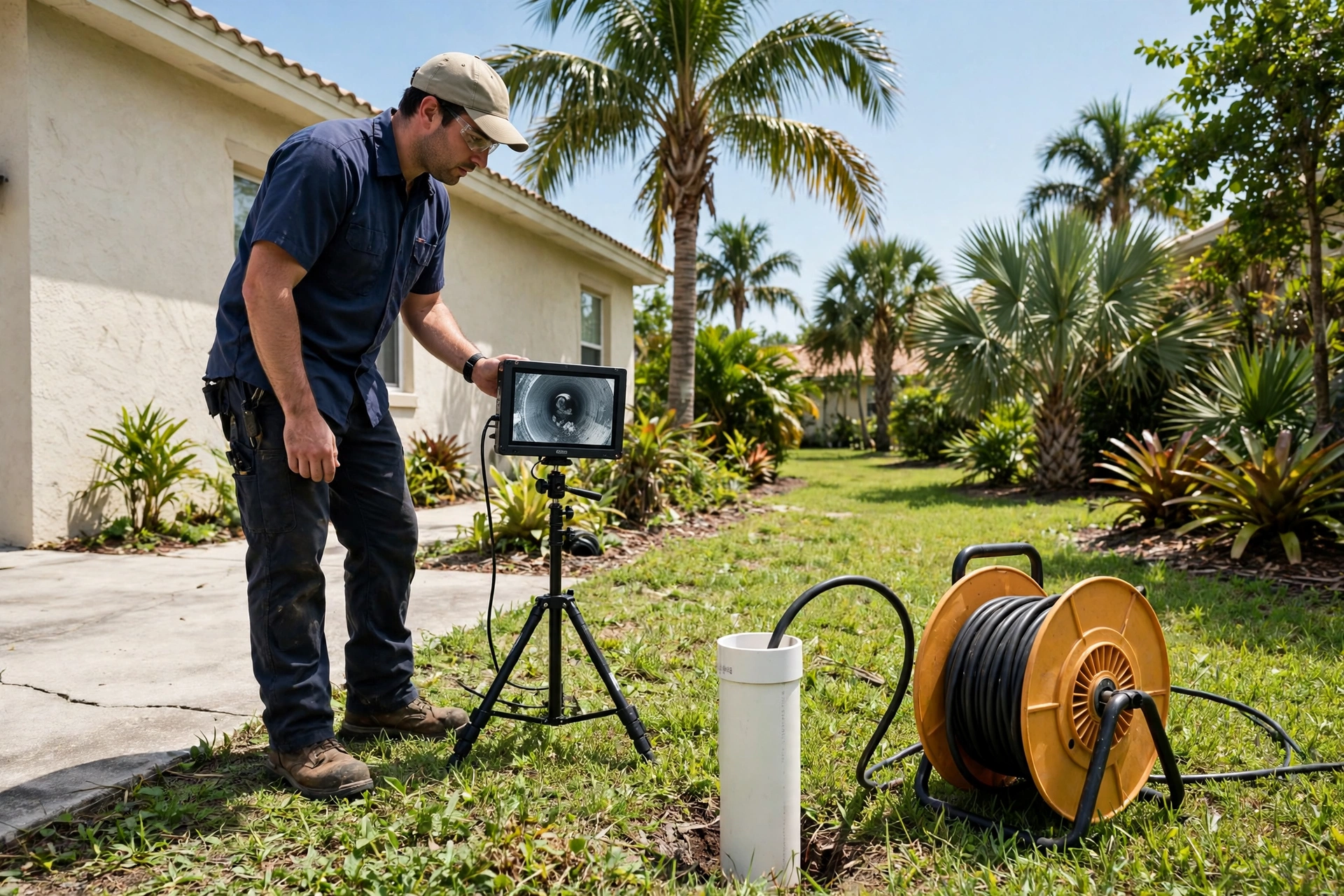
- You watch it live on a monitor. Cracks, roots, bellies, and offsets pass across the screen in real time, and the technician points out each one as it appears. You see the diagnosis, not a description of it.
- A locator marks the spot above ground. A handheld locator picks up the camera's signal through the soil and marks the exact location and depth of each defect, so a repair crew digs once, in the right place.
- You keep the footage and a written summary. The video and the summary become your record: the baseline for the next inspection, the evidence for a repair quote, and the proof of condition if you ever sell the house.
The inspection itself is quick. The camera travels the line while you watch, and most of the visit is the technician explaining what the footage shows. Bring your questions to the monitor, not after the crew leaves.
Same drain clogging again? A snake clears it. A camera shows why it keeps happening — and that answer is what ends the loop.
Call (941) 214-9486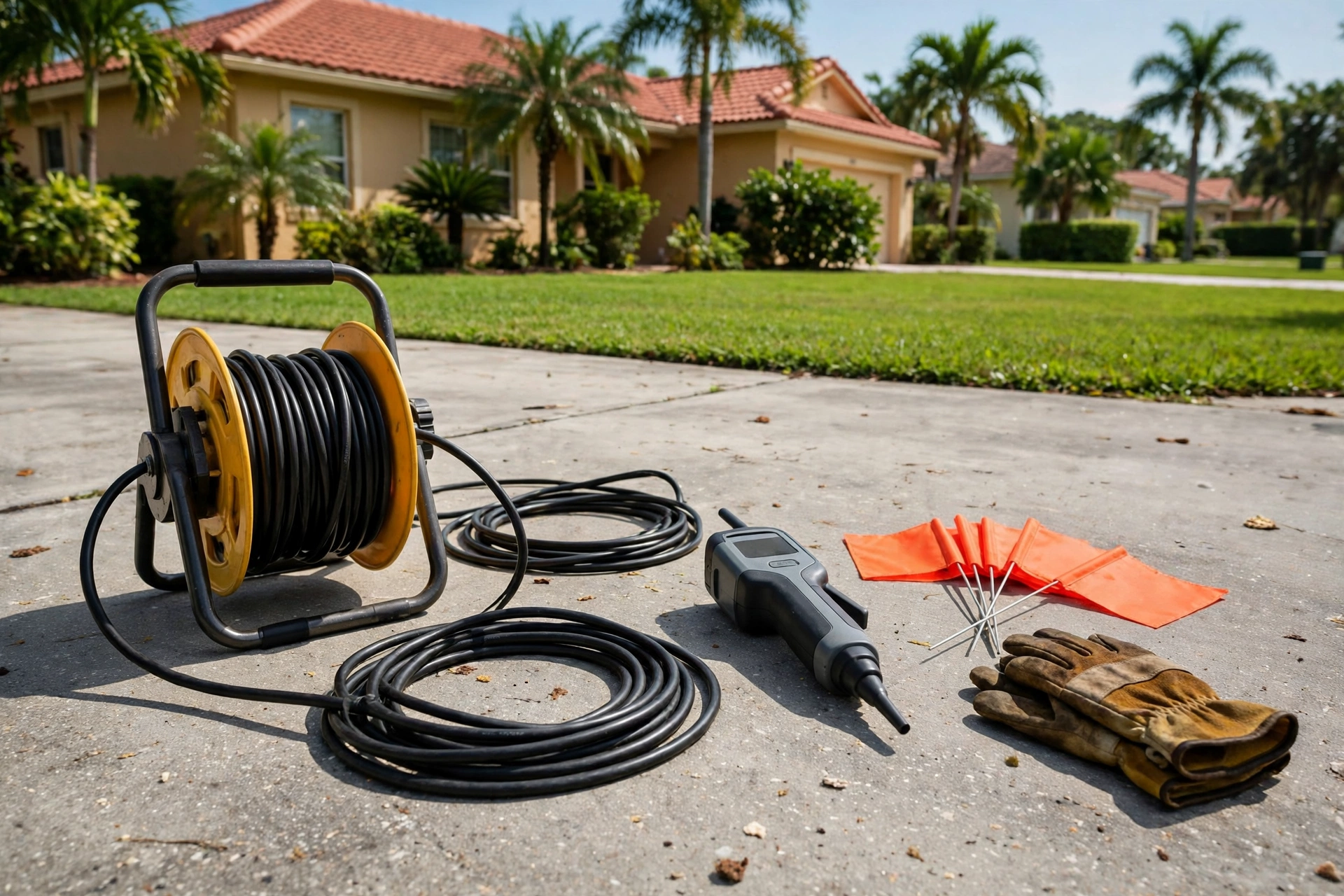
When a Snake Is the Right Call
None of this makes the snake useless. It is the right tool for a simple clog, and reaching for the camera every time a drain slows would be wasteful. The snake is the right call when the clog is a first-time event, when only one fixture is slow, when the blockage is near the fixture, or when a camera has already shown a sound pipe and something just got stuck in it. Grease in a kitchen line, paper in a toilet line, hair in a shower drain: a snake handles those, and the problem does not come back.
There is also a middle step worth knowing about. When the line needs more than a clearing, hydro jetting scours the inside of the pipe with high-pressure water, stripping grease and scale the snake leaves behind. Jetting still does not diagnose anything, so it pairs with a camera inspection, before the jetting to find the problem and after it to confirm the pipe is clean.
The rule of thumb is simple. One clog, one snake. The same clog twice, a camera. An old line, a home purchase, or a repair decision on the table: camera first, always.
What the Footage Changes About the Repair
A repair plan written from a camera report looks nothing like one written from a guess. The footage decides the method: a cracked but sound pipe can be lined, a pipe too far gone to line can be burst, and a collapsed section needs a dig. Without the footage, a contractor picks a method and hopes the pipe agrees. See trenchless vs traditional sewer repair for how those methods compare once the camera has had its say.
The footage also decides the scope. A single offset joint ten feet from the cleanout is a spot repair, not a full replacement. A belly under the driveway is a different job from a belly under the lawn. The locator marking means the crew opens the ground at the defect instead of trenching the whole run to find it.
And the footage outlives the repair. It is the baseline the next inspection compares against, the record a buyer asks for, and the documentation a permit file wants. Manatee County's licensing and permits pages set out the permit and inspection steps for sewer work, and a camera report is the document that starts that file. Before you sign anything, read the questions to ask before you sign a sewer repair contract and bring the footage to that conversation.
What to Ask Before You Book One
Not every camera inspection is equal, and the questions below separate a real diagnostic visit from a camera waved at a drain for show.
- Will I get a copy of the footage? If the answer is no, the inspection is a sales call. The video is the product. Ask for it before the crew arrives, not after they leave.
- Will you mark the location and depth of each problem? A report that says "there is a break somewhere" is not useful. The locator marking is what turns footage into a repair plan.
- Will I get a written summary, not just a verbal verdict? Verbal verdicts fade. A written summary lists each defect, its location, and what it means, in words you can show another contractor.
- Where will you access the line? A cleanout is the normal route. If the home has none, ask whether one should be installed, since every future inspection will need the same access.
- What happens if the camera cannot pass? A blockage the camera cannot pass is itself a finding, and the plan from there is usually a clearing followed by a second look, not a shrug.
Renting, not owning? The rules about who books the inspection and who pays for it are different when a landlord is involved. See our guide to sewer backups in Bradenton rentals for how that side works.
Start With the Camera When the Problem Keeps Coming Back
Most sewer lines in Bradenton fail the same way: quietly, underground, one repeat clog at a time. The homeowners who spend the least on their sewer line are not the ones with the newest pipes. They are the ones who looked. A camera inspection turns a mystery into a picture, a picture into a plan, and a plan into a repair that happens once. If your drain has clogged twice in the same place, stop clearing it and start looking at it. The camera will show you what the snake never could.
Need help with your sewer line?
Our crews work across Bradenton and the whole of Manatee County. A camera look is the quickest way to find out what your line is doing underground.
Call (941) 214-9486