
In a Bradenton rental, the sewer lateral belongs to the property, so the landlord owns the repair. The tenant's job is to stop using water, report the backup in writing right away, and keep a record. The landlord's job is to get a plumber out fast, find the cause with a camera, and fix the line. The county owns only the public main in the street.

Whose Pipe Is It, Anyway?
Three pieces of pipe meet at every rental, and each one has a different owner. The lateral runs from the house to the street, and it belongs to the property, which means the landlord. The public main in the street belongs to the county. The drains and fixtures inside the house belong to the property too, but the tenant is the one using them, and the lease usually says the tenant must use them properly. That split is where most arguments start, so it helps to know it before anything backs up.
The dividing line matters because it decides who arranges the work. A backup caused by a failing lateral, roots in the line, a belly, a collapsed section, is the owner's repair, and the owner hires the plumber. A backup caused by something flushed down the drains is a different conversation, and the lease may say something about it. The camera footage usually settles which one it is, which is why the first call after a backup should include one. See who owns the sewer line, you or Manatee County for the full map of where responsibility changes hands, and Manatee County for the public side of the system.
One more thing worth knowing now, not later: the lease is the document that fills in the gaps. Some leases spell out who calls the plumber, how fast the landlord must respond, and what happens to rent while a home cannot be lived in. Others say almost nothing. Read yours before a backup, not during one.
What Tenants Should Do in the First Hour
A backup is an emergency, and the first hour decides how bad it gets. Stop using all water immediately. Do not flush, do not run the shower, do not start the washing machine or dishwasher. Every gallon you send down the drains adds to a system that is already reversing, and the backup will get worse while you wait.
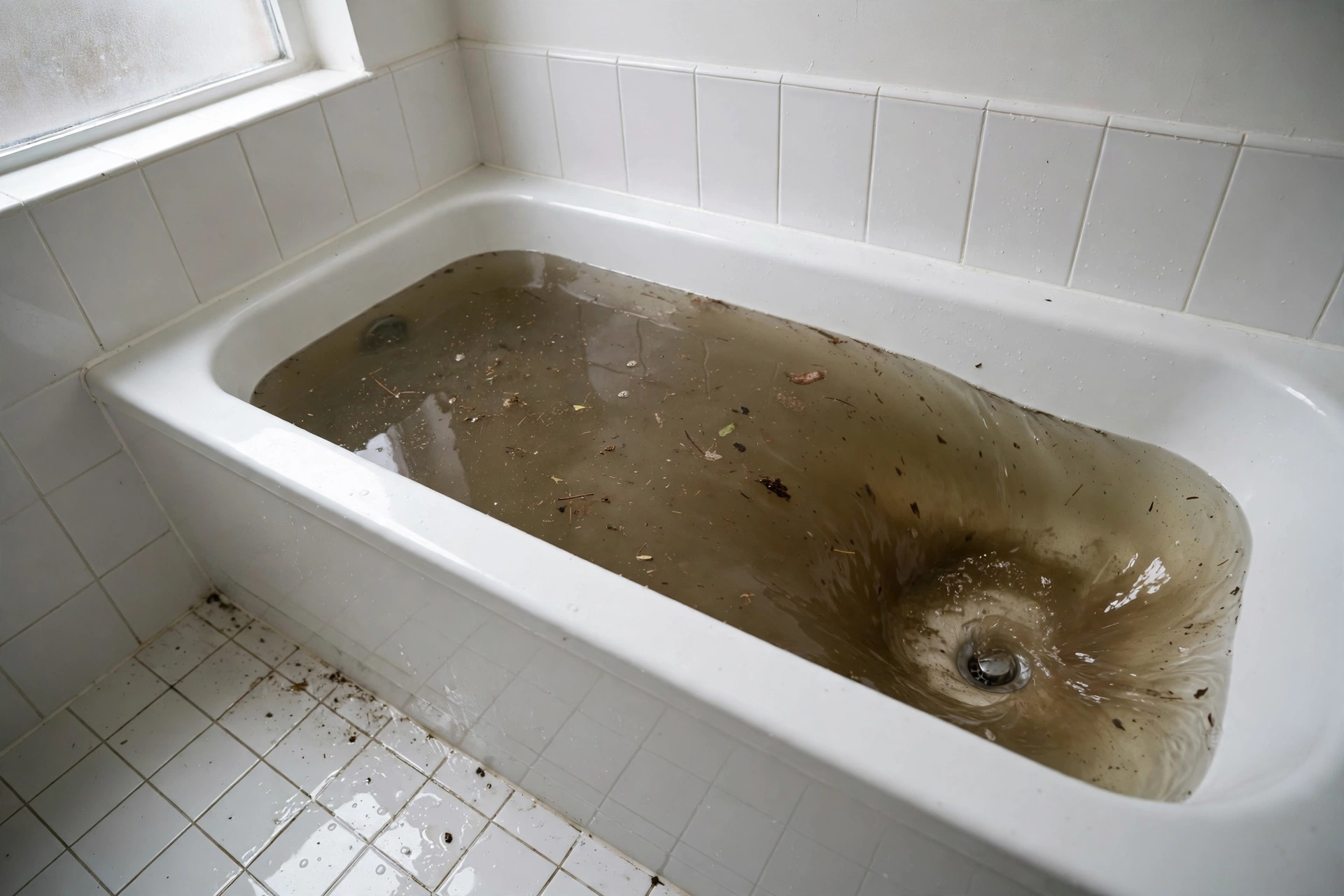
Then tell the landlord, twice. Call or text first so the clock starts, then follow up in writing, an email or a text with the date, the time, and photos of what is happening. Written notice protects you in a way a phone call never does. Take photos and short video of every affected fixture, note the time, and keep the messages. Do not use chemical drain cleaners, and do not try to snake the line yourself. Chemicals create a hazard for the plumber who opens the line later, and a snake in the wrong hands can damage a pipe you do not own.
Keep children and pets out of the affected rooms. Sewage is a biohazard, and the cleanup is not a mop job. If the landlord does not answer, leave a message, send the written notice anyway, and keep trying. The written record matters even if the phone call never connects.
What Landlords Should Do in the First Day
A landlord who hears about a backup has one job above all others: get a plumber out fast. Sewage in a living space is an emergency, not a routine repair, and every hour of delay adds cleanup, damage, and a tenant who is losing patience. Call for emergency sewer backup service and say the property is a rental with an active backup, so the crew brings the right equipment.
Once the backup is stopped, find the cause before approving a repair. That means a camera inspection of the lateral, not a guess. Read what a sewer camera inspection finds that a drain snake can't to see what the footage shows and why it matters for the repair decision. Keep the footage and the written summary: they become the record for the insurance claim, the proof of condition for the next tenant, and the answer if anyone asks what was wrong.
Talk to the tenant the same day. Tell them what is happening, when the plumber is coming, and when you will update them next. Silence is what turns a plumbing problem into a relationship problem. And keep every invoice, every message, and every photo in one file. If the backup becomes an insurance claim or a dispute, that file is the whole case.
The first 48 hours after a backup in a rental
- Stop the water. Tenant stops using all water immediately: no flushing, no showers, no appliances that drain.
- Notify the landlord in writing. Tenant calls or texts first, then sends an email or text with the date, time, and photos.
- Document everything. Tenant photographs every affected fixture and keeps every message and receipt.
- Landlord sends a plumber and a camera. Landlord arranges emergency service and a camera inspection to find the cause.
- Keep the records together. Both sides keep invoices, footage, messages, and photos in one place.
A backup in a rental is two problems at once, a plumbing problem and a people problem — and the written record is what keeps the second one small.
Call (941) 214-9486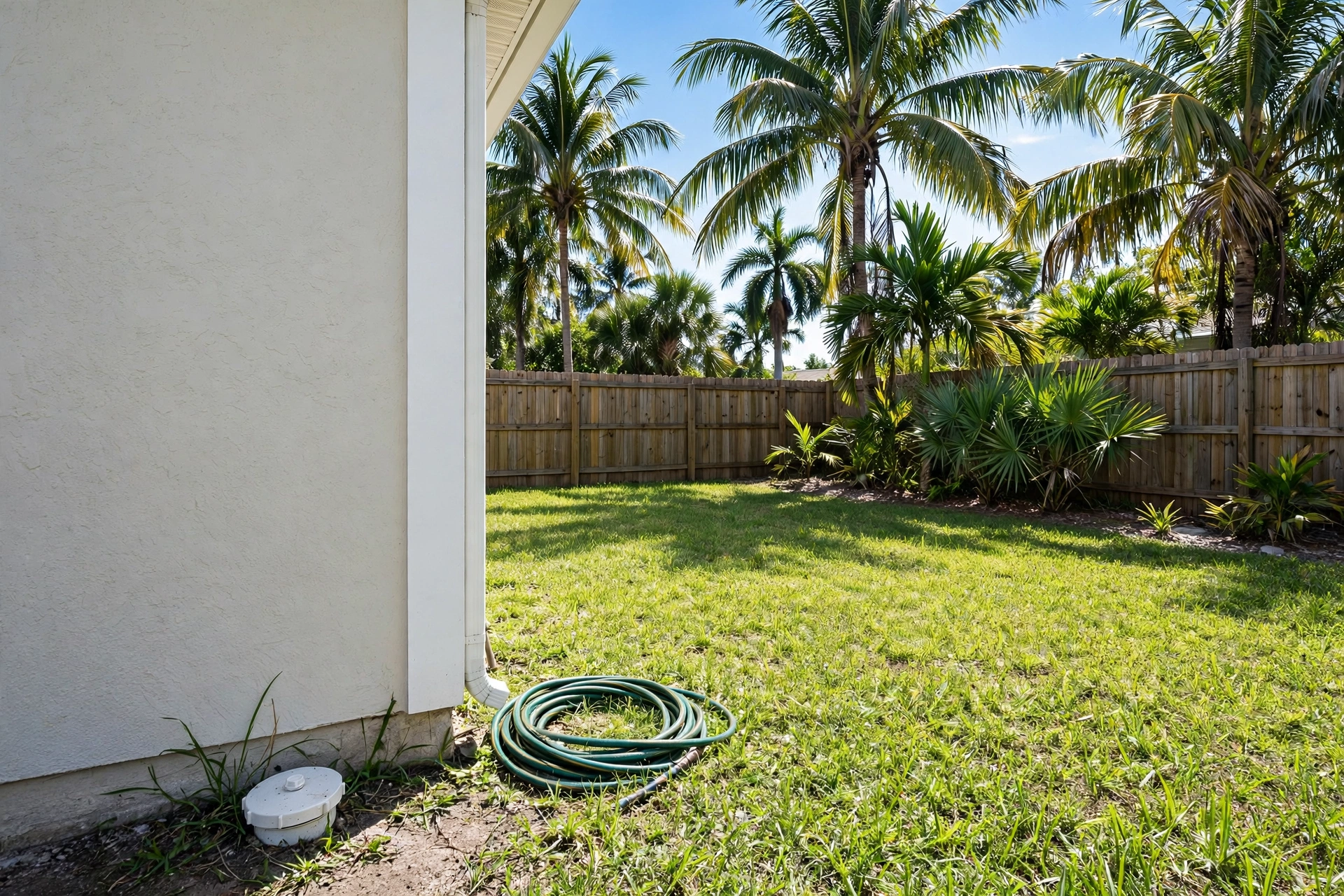
The Paper Trail That Protects Both Sides
Almost every rental sewer dispute comes down to the same question: what did you know, and when did you know it? The paper trail answers it, and it costs nothing to keep. Tenants should report in writing, keep copies of every message, and photograph the problem before anything is cleaned up. Landlords should answer in writing, keep the plumber's report and the camera footage, and keep every invoice.
| Task | Tenant | Landlord |
|---|---|---|
| Report the backup | Yes, in writing, right away | Receives the report and acts on it |
| Stop using water | Yes, immediately | Not applicable |
| Call the plumber | No, unless the lease says so | Yes, emergency service first |
| Find the cause | No | Yes, camera inspection of the lateral |
| Pay for the lateral repair | No, the lateral belongs to the property | Yes |
| Damage to tenant belongings | Covered by renters insurance, if the tenant has it | Not the landlord's policy |
| Damage to the building | No | Covered by the landlord's policy, if the coverage is in place |
| Preventive maintenance | Use drains properly, report slow drains early | Inspections, cleanout caps, backwater valve where needed |
Two details deserve attention. First, the lease can shift small responsibilities, like keeping wipes and grease out of the drains, but it cannot shift ownership of the lateral. Second, a tenant who reports a slow drain in writing months before a backup has a much stronger position than one who mentions it for the first time while standing in sewage. Early written reports protect tenants. Fast written responses protect landlords.
Preventing the Next Backup in a Rental
The cheapest rental backup is the one that never happens, and prevention in a rental is mostly a landlord job with one tenant habit attached. Start between tenants, when the house is empty. A camera inspection at turnover shows the line's condition, and the footage becomes the baseline. That matters most in older rentals, where the lateral is often clay or cast iron and already near the end of its life, so if a backup happens six months later, the footage shows whether the problem predates the tenant or started during the tenancy. That single record prevents more arguments than any lease clause.
Then the small things. Check that cleanout caps are present and intact, since a missing cap lets surface water pour straight into the lateral. Put the flush rules in the welcome sheet, not just the lease: wipes, grease, coffee grounds, and hygiene products belong in the trash. See the ten things you should never flush for the full list. For properties with a history of backups, or in low-lying parts of town, a backwater valve stops a surcharged main from pushing sewage back into the house, and a sewer maintenance program keeps the line checked on a schedule instead of on an emergency.
The tenant's part is simple and it matters: report slow drains early, in writing, the first time they appear. A drain that gurgles for three months and then backs up was a warning the whole time. See the warning signs your sewer line is failing so a tenant knows what to watch for, and how hurricane season causes backups for the storm-season version of the same advice.
Insurance: Whose Policy Covers What
Insurance is where landlords and tenants talk past each other most. The split is simple once you see it: the landlord's policy covers the building, and the tenant's renters insurance covers the tenant's belongings. A backup that damages both needs both policies, and neither one covers the other side.
There is a catch worth checking before a backup, not after. Many standard policies exclude sewer backup unless the policy carries a backup endorsement, on both the landlord's policy and the tenant's renters policy. That endorsement is the coverage that decides whether a backup is a claim or a bill. See whether homeowners insurance covers sewer line repair for how the endorsement works and what to ask an agent. Tenants without renters insurance have no coverage for their belongings at all, which is worth knowing before a backup, not while mopping one up.
When a Backup Makes a Rental Unlivable
A backup that leaves sewage in the living space is not a minor inconvenience, and the conversation changes once the home cannot be lived in while repairs happen. Put it in writing: what is unusable, since when, and what you need. Ask the landlord what temporary arrangements they will cover, and keep their answer in writing too.
If the two sides cannot agree, that is the point to get advice rather than guessing. A local tenant-rights or legal-aid resource can explain the options for the specific lease and the specific situation. Do not stop paying rent or hire your own plumber and send the bill without advice first, since both moves can create a second problem while the first one is still open. The written record you kept from the first hour is what any advisor will ask for first.
A Simple Move-In Checklist for Rentals
Ten minutes at move-in saves a fight later. Walk the house with this list, take photos as you go, and send the landlord a copy of anything you find.
- Test every drain. Run every faucet, flush every toilet, and watch for slow drainage or gurgling.
- Find the cleanout. Know where the white cleanout cap sits in the yard, and check that it is present and intact.
- Know the water shutoff. Find the main shutoff before you need it, not during a backup.
- Save the landlord's emergency number. Not the office number, the number that answers at night.
- Photograph the drains and fixtures. A dated photo at move-in proves what the place looked like before you lived there.
- Ask when the line was last inspected. If the answer is never, or nobody knows, that is useful information too.
Can you use water while a repair is underway? It depends on the job, and the answer is different for a repair day than for a backup. See whether you can use water during sewer line repair for the practical version.
Need help with your sewer line?
We cover Bradenton and every community in Manatee County. A camera inspection gives the clearest picture of what is happening in the lateral.
Call (941) 214-9486