What "Trenchless" Actually Means
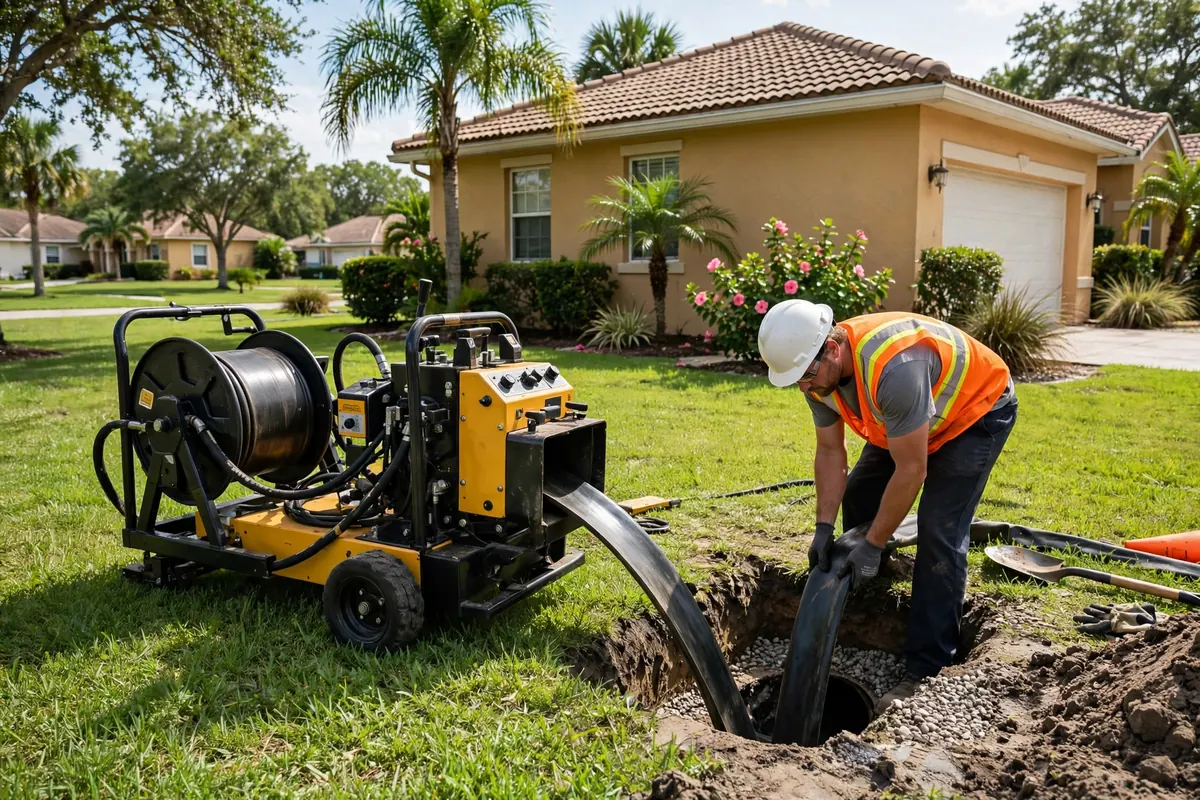
Trenchless is exactly what it sounds like. Instead of digging up the full length of your sewer line, we work through small entry points — usually one or two holes about the size of a manhole cover. Everything happens underground.
There are two trenchless methods, and they do very different things. Pipe lining (CIPP) builds a new pipe inside your old one. Pipe bursting breaks the old pipe apart and pulls a brand-new one into its place. Same no-dig idea, different jobs. A sewer camera inspection tells us which one your pipe actually needs.
Your Two Trenchless Options, Side by Side
Pipe lining works best when your pipe is still mostly holding its shape — cracked joints, root intrusion, corrosion, minor offsets. We saturate a flexible liner with epoxy resin, slide it into the old pipe, and cure it in place. The result is a smooth, jointless new pipe inside the old shell.
Pipe bursting is the answer when the old pipe is too far gone to line — collapsed sections, severe breaks, or pipe that's lost its shape entirely. A bursting head breaks the old pipe outward while pulling new HDPE pipe right behind it. You end up with a completely new line, and it can even be a larger diameter than the old one.
Neither method is "better" in the abstract. The right one depends on what your pipe looks like on camera, how deep it runs, and what's sitting on top of it.
How We Help You Choose
Here's how a typical job goes:
- Camera inspection first. We run a camera through the line and record the whole thing. You see exactly what we see — cracks, roots, bellies, breaks.
- We lay out your real options. Lining, bursting, or a spot repair on one bad section. We'll tell you the honest trade-offs of each for your specific pipe.
- One or two small access points. No trench across the yard. Most jobs finish in a day.
- Final camera check. We run the camera again so you can see the finished work before we leave.
If trenchless isn't right for your situation — say the pipe has fully collapsed or there's a severe belly holding water — we'll tell you that too, and talk through traditional replacement instead.
Why Trenchless Makes Sense in Bradenton
Bradenton yards aren't cheap to rebuild. Between mature live oaks, paver driveways, pool decks, and canal-front landscaping, digging a trench can cost you as much in restoration as the pipe work itself. Trenchless skips almost all of that.
There's also a local vote of confidence worth knowing: the City of Bradenton has been pursuing state funding for a sanitary sewer lining program to rehabilitate aging clay pipes without digging up streets. When the city itself is lining pipes instead of digging them up, that tells you something about which method holds up in our sandy soil and high water table.
Older neighborhoods like Bayshore Gardens and the 1950s ranch areas west of downtown are full of original clay and cast-iron laterals that are prime candidates for lining — the pipe is worn but still has its shape, which is exactly what lining needs.
Signs Your Sewer Line Might Be a Trenchless Candidate
You don't need to know which method fits — that's our job. But these are the symptoms that usually lead to a trenchless fix:
- Recurring backups or slow drains that keep coming back after snaking
- Gurgling toilets or drains when you run water elsewhere
- Soggy or sunken patches in the yard, or one suspiciously green strip of grass
- Sewer smells in the yard or near floor drains
- A camera inspection showing cracks, root intrusion, or offset joints — but the pipe still has its shape
If the pipe has fully collapsed in spots or has a deep belly that traps water, trenchless may not be enough. The camera inspection sorts that out before anyone commits to anything.