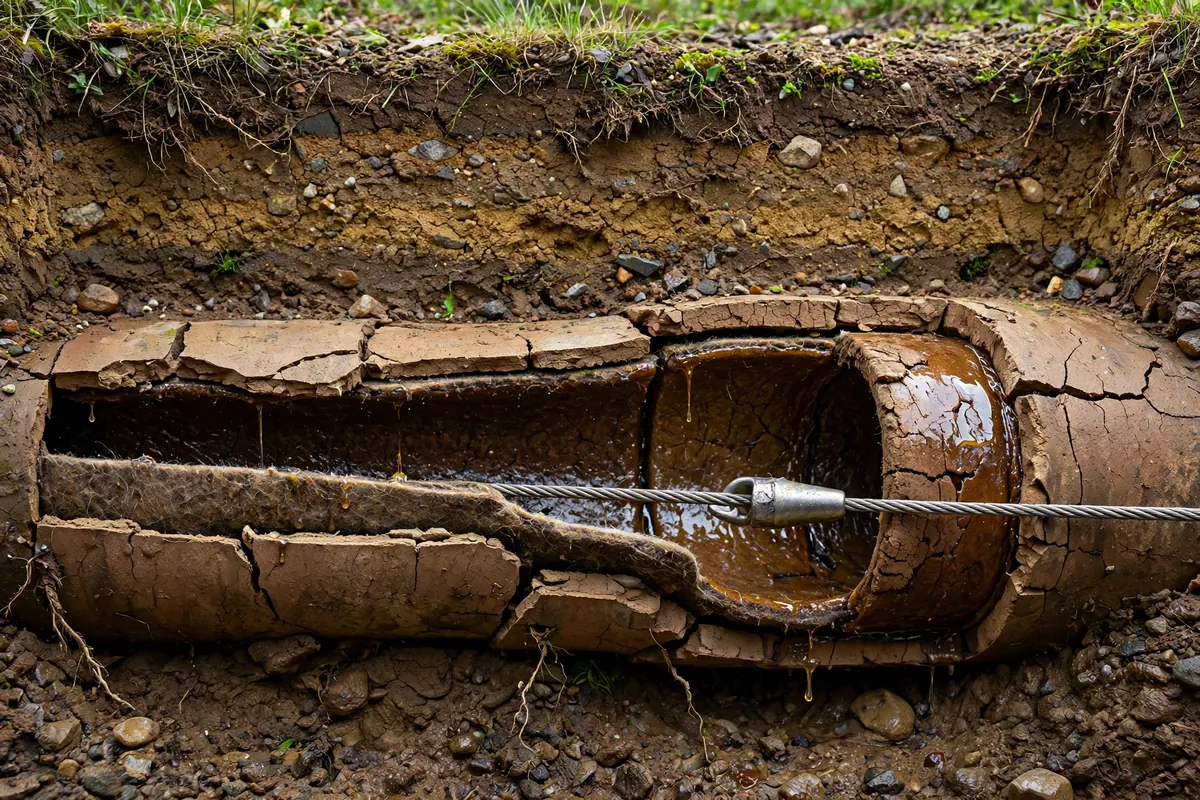
How a Liner Becomes a New Pipe
It sounds almost too simple, but the process is precise. Here's what happens:
- Inspect. We run a camera through the line to map every crack, joint, and root intrusion. Lining only works if the pipe still holds its basic shape.
- Clean. The old pipe gets thoroughly cleaned — usually with hydro jetting — so the liner bonds to a clean surface. Roots, scale, and sludge all come out first.
- Saturate and insert. A flexible felt liner is soaked in two-part epoxy resin, then pulled or inverted into the old pipe.
- Cure. Hot water, steam, or UV light hardens the resin. A few hours later, the soft liner is a rigid, structural pipe.
- Verify. We camera the finished line so you can see the result: a continuous new pipe with no joints for roots to exploit.
What Pipe Lining Fixes — and What It Can't
Lining is excellent for the problems Bradenton's older pipes develop: cracked clay joints, root intrusion at the joints, internal corrosion and scale in cast iron, and minor offsets where sandy soil has shifted a joint slightly out of line.
It can't fix everything. A fully collapsed section has no shape for the liner to follow. A deep belly — a sagging section that holds standing water — will still hold water after lining, because the liner follows the old pipe's path. In those cases, pipe bursting or spot repair is the honest answer. That's why the camera inspection comes first, every time.
Why Lining Fits Bradenton's Pipes
A lot of Bradenton's housing stock — the 1950s and 60s ranches in Bayshore Gardens, the mid-century neighborhoods west of downtown, the older streets of Palmetto — still runs on original clay or cast-iron laterals. After 60-plus years, those pipes are cracked and root-invaded but usually still standing. That's the sweet spot for lining.
Our sandy soil is another reason lining does well here. Sand shifts, and shifting opens up joints in old clay pipe — exactly the kind of damage a jointless liner seals up permanently. And because the finished liner has no joints at all, live oak roots can't find their way back in the way they did through the old clay joints.
The City of Bradenton itself has pursued state funding for a sewer lining program targeting its aging clay collection pipes. Lining isn't experimental here — it's the region's endorsed way to rehabilitate old pipe.
Lining vs. Pipe Bursting: The Quick Difference
Homeowners mix these up constantly, so here's the short version: lining keeps your old pipe as a host and builds a new pipe inside it. Bursting destroys the old pipe and pulls a new one into its place. Lining needs the old pipe to still have its shape; bursting doesn't care — it replaces everything.
Lining usually means even less digging than bursting (sometimes just one access point), and it's often the right call when the pipe is worn but intact. When the pipe is collapsed or you need a bigger line, bursting takes over. Our trenchless overview walks through how we help you choose.
What to Expect on Lining Day
Most residential lining jobs finish in a single day. You'll need to avoid running water for a few hours while the liner cures — we'll give you the exact window that morning. There's some equipment in the yard and a bit of noise, but no trench, no backhoe, and no pile of dirt. By evening, your line is a new pipe and your yard looks like we were never there.