Your Drains Are Trying to Tell You Something
One slow sink is a sink problem. Every drain moving slowly is a main line problem. Here's how to tell the difference:
- Multiple fixtures affected. The shower drains slowly AND the toilet bubbles AND the kitchen sink gurgles — that's the main line.
- Gurgling sounds. Air trapped by a partial blockage escapes through other drains. That glug-glug when you flush is a classic sign.
- Water backing up in odd places. Run the washing machine and water appears in the shower. Flush the toilet and the tub fills. The blockage is downstream of all of them.
- Sewage smells from floor drains or the yard cleanout area.
If it's just one fixture, that's a branch line — a different, simpler job. Everything at once means the main.
How We Clear It — and Find Out Why
Clearing is step one. Understanding is step two — because a main line that clogs once will clog again unless you know why.
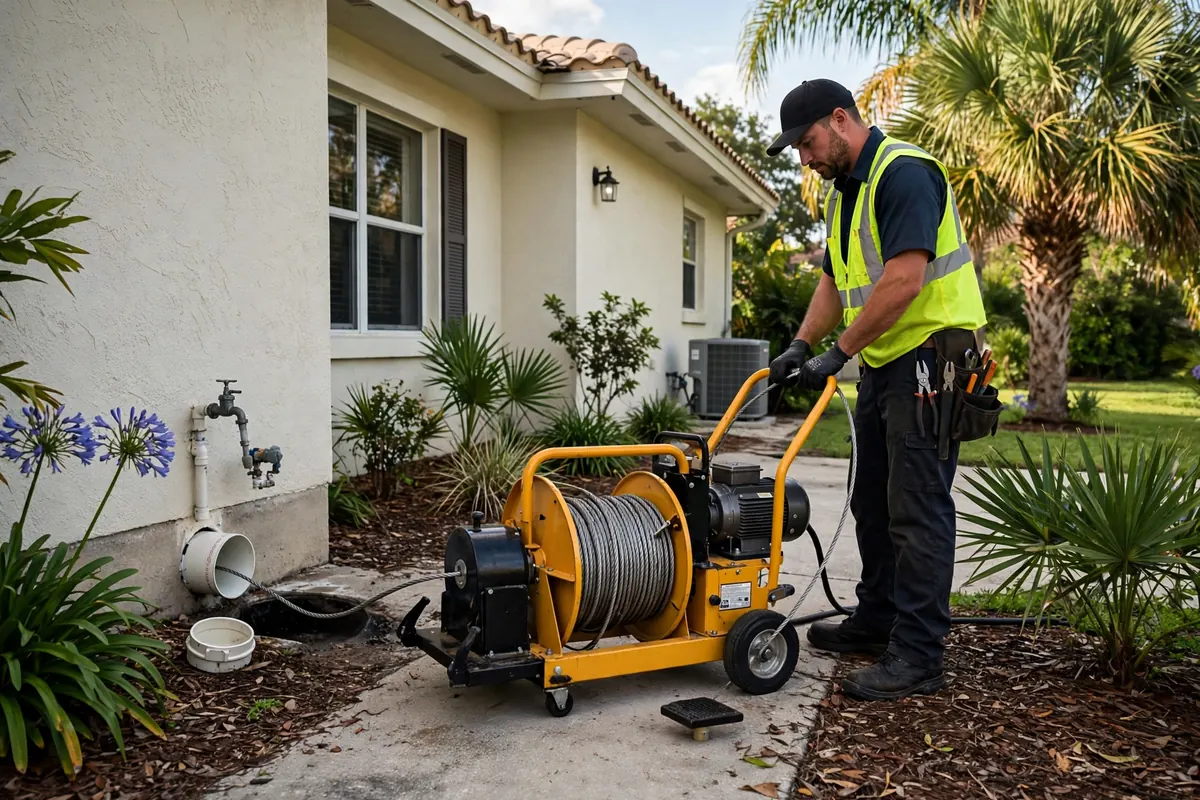
- Clear the blockage. We open the line with a professional drain machine or hydro jetting, depending on what's in there. Flow restored.
- Camera the line. This is the part most drain cleaners skip. We run the camera through the cleared line to see what caused it — roots, grease, scale, a break, a belly.
- Fix the cause, not just the symptom. Roots? Let's talk root removal and sealing the joints. Grease? A jetting schedule. Breaks or bellies? Repair options with real numbers.
A company that clears your main and leaves without looking inside is selling you a repeat visit. We'd rather solve it.
Why Mains Clog in Bradenton Homes
The usual suspects here: live oak roots working through old clay joints, grease buildup in kitchen-heavy lines, scale narrowing 50-plus-year-old cast iron, and sandy soil washing sediment in through cracked joints. In low-lying areas near the river and bay, heavy rain can also push the water table up into compromised lines and trigger a backup that looks like a clog but is really infiltration.
Homes from the 1950s through the 70s — Bayshore Gardens, west Bradenton, Palmetto's older streets, Samoset — are the most likely to have chronic main line trouble, because the original pipe is simply at the end of its comfortable life.
When Cleaning Isn't Enough
Sometimes the camera shows that cleaning is just buying time: a collapsed section, heavy channeling in cast iron, or a belly that will keep collecting debris no matter how clean the rest of the line is. We'll tell you straight when that's the case, and show you the footage so you can see it yourself. A spot repair or trenchless fix on the bad section beats paying for cleanings every few months.