Follow Your Nose — Then Call Us
Sewer gas has a distinctive rotten-egg smell (hydrogen sulfide), and your nose is actually a decent first diagnostic tool. Where you smell it tells us a lot:
- One bathroom, intermittent. Often a dry trap — the water seal in a floor drain or guest-bathroom fixture evaporated. Florida's heat evaporates unused traps faster than you'd think. Sometimes the fix is literally pouring water down the drain.
- Near fixtures after flushing. Could be a failed wax ring under the toilet — the seal between toilet and flange — letting gas escape with every flush.
- From the yard or near the cleanout. Points to the lateral itself: a cracked pipe, a broken joint, or a damaged cleanout cap venting gas straight out of the ground.
- Everywhere, all the time. Suggests a venting problem — a blocked or cracked vent stack — or a significant break in the line.
We'll ask where and when you smell it before we even roll the truck. The pattern narrows the hunt enormously.
How We Hunt Down the Source
- Walk the system. We check every trap, every toilet seal, every visible connection. The simple causes get ruled out first — no point in scoping a line when the guest bathroom trap just dried out.
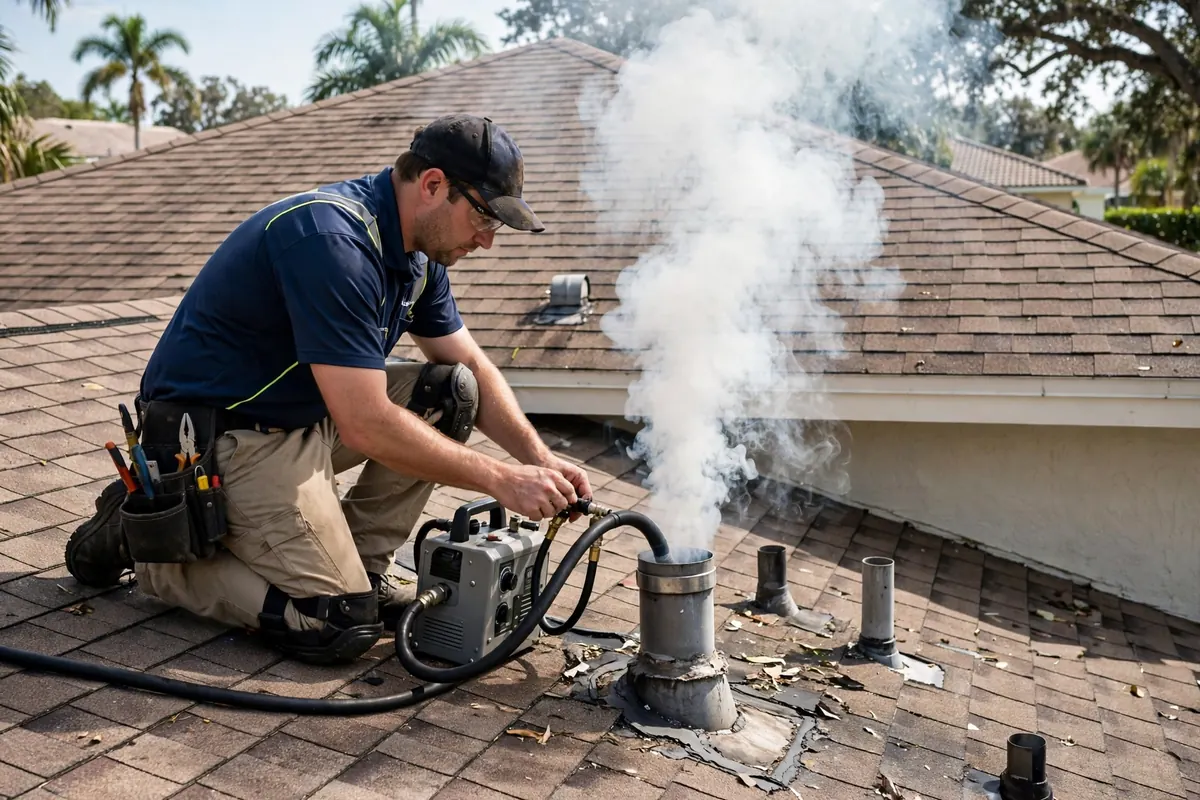
- Smoke testing. For elusive leaks, we introduce non-toxic smoke into the system. Smoke escapes wherever gas escapes — a cracked vent pipe in the wall, a broken joint under a slab — and shows itself. It's the most definitive odor diagnostic there is.
- Camera inspection. If the evidence points underground, we run the camera through the lateral looking for cracks, breaks, and separated joints venting gas into the soil — which then seeps up through your yard or slab.
Most odor hunts end within a single visit. The fix depends on the source: resealing a trap or toilet, repairing a vent, or repairing the cracked section of line.
Why Odors Show Up in Bradenton Homes
A few local factors make odor calls common here. Our heat evaporates water from unused traps quickly — guest bathrooms, floor drains in garages, and laundry standpipes dry out in weeks without use. The high water table means cracked underground joints don't just leak water in; they let gas out into saturated soil that carries it upward. And in our 1950s–70s housing stock, aging wax rings, corroded vent piping, and cracked clay joints are all reaching the age where seals fail.
After heavy rain, odor complaints spike — infiltrating water disturbs the system and pushes gas through every available opening. If the smell gets worse when it rains, that's a clue pointing underground.
Don't Ignore It
Beyond being unpleasant, persistent sewer gas exposure causes headaches and nausea, and in enclosed spaces, high concentrations are genuinely hazardous. A faint occasional whiff from an unused drain is a pour-some-water fix. A strong or constant odor is a find-the-source-now situation. If the smell is strong, ventilate the area and call us — we'll track it down.