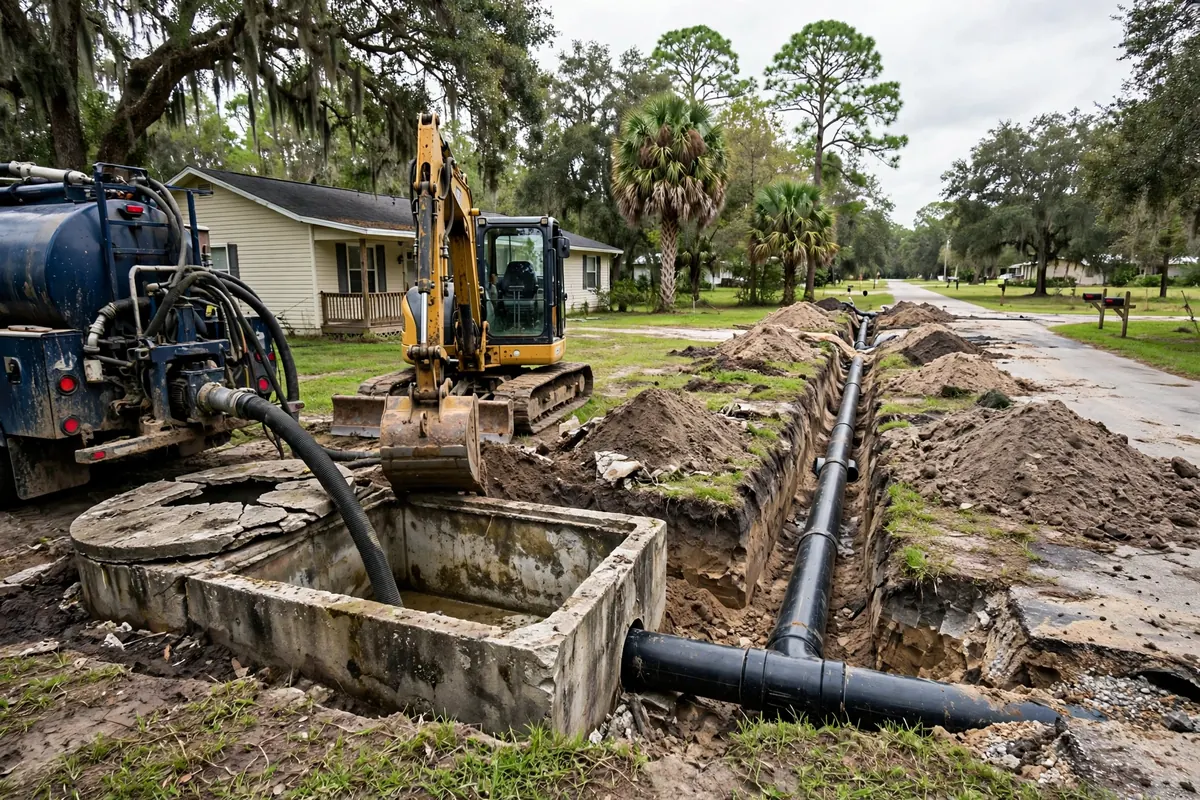
Say Goodbye to the Tank
Septic systems work — until they don't. Tanks need pumping every few years, drain fields eventually fail (especially in our high water table, where there's nowhere for effluent to go), and a full system replacement is one of the most expensive surprises a homeowner can face. County sewer eliminates all of it: your wastewater flows to the treatment plant, and your only job is paying the utility bill.
There's a bigger picture too. In low-lying areas — the island communities, riverfront neighborhoods, canal-front streets — aging septic systems sit in a high water table that barely treats effluent before it reaches groundwater. Manatee County has been actively pushing conversions for exactly this reason, with grant funding to help homeowners make the switch.
How a Conversion Works
- Confirm availability. First question: does county sewer actually reach your street? We verify with Manatee County Utilities. If the main isn't there yet, the MSBU petition process below may be your path.
- Permits and connection fees. The county charges connection/capacity fees — we'll tell you what to expect and handle the permit paperwork for the construction side.
- Install your lateral. We trench or bore a new sewer line from your house to the county main at the street or easement — correct slope, proper bedding, inspected.
- Connect and switch over. Your home's plumbing gets rerouted from the tank to the new line. One day you're on septic, the next you're on sewer.
- Retire the tank. The old tank gets pumped, crushed or filled, and abandoned per county requirements. No open tank left in your yard — that's a safety and code issue we don't skip.
The MSBU Petition: Bringing Sewer to Your Street
Here's what many septic homeowners don't know: if county sewer doesn't reach your street yet, you and your neighbors can petition for it. Manatee County's MSBU (Municipal Service Benefit Unit) process lets benefiting property owners petition for a county sewer extension — if enough owners agree, the county builds the main and assesses the cost across the benefiting properties.
This is a real, documented path — not a rumor. The county has studied exactly this kind of extension before: a 2019 county utilities presentation documented roughly 250 septic-served residential parcels on Snead Island in west Palmetto, with the county studying a gravity sewer and miles of force main to serve them. If your neighborhood is in a similar gap, the petition process is how the gap gets closed. We can explain how it works and what to expect, and handle your property's connection once the main arrives.
Grants Can Help With the Cost
Manatee County Utilities administers a Septic to Sewer Conversion Grant program aimed at helping homeowners make the switch — part of the county's broader push to get aging septic systems off the groundwater in vulnerable areas. Grant availability and eligibility change, so we check current program status when we quote your conversion. Between grants and the MSBU process, the financial path is often better than homeowners expect.
Where conversions matter most: Myakka City and the rural east, where septic and private wells are the norm; the Snead Island/west Palmetto gap; older unincorporated pockets around Ellenton, Memphis, and Parrish's rural edges; and low-lying waterfront properties where a high water table makes septic marginal at best.
Septic or Sewer: How to Decide
If your septic system is young, healthy, and your water table cooperates, there's no emergency — maintain it and revisit later. But if you're facing a drain field replacement, dealing with backups, or your tank is decades old, compare that cost against conversion before you spend it. A new drain field is money sunk into a system the county ultimately wants retired; a conversion is money toward the permanent solution. A camera inspection of your current setup gives us the facts to quote both paths accurately.