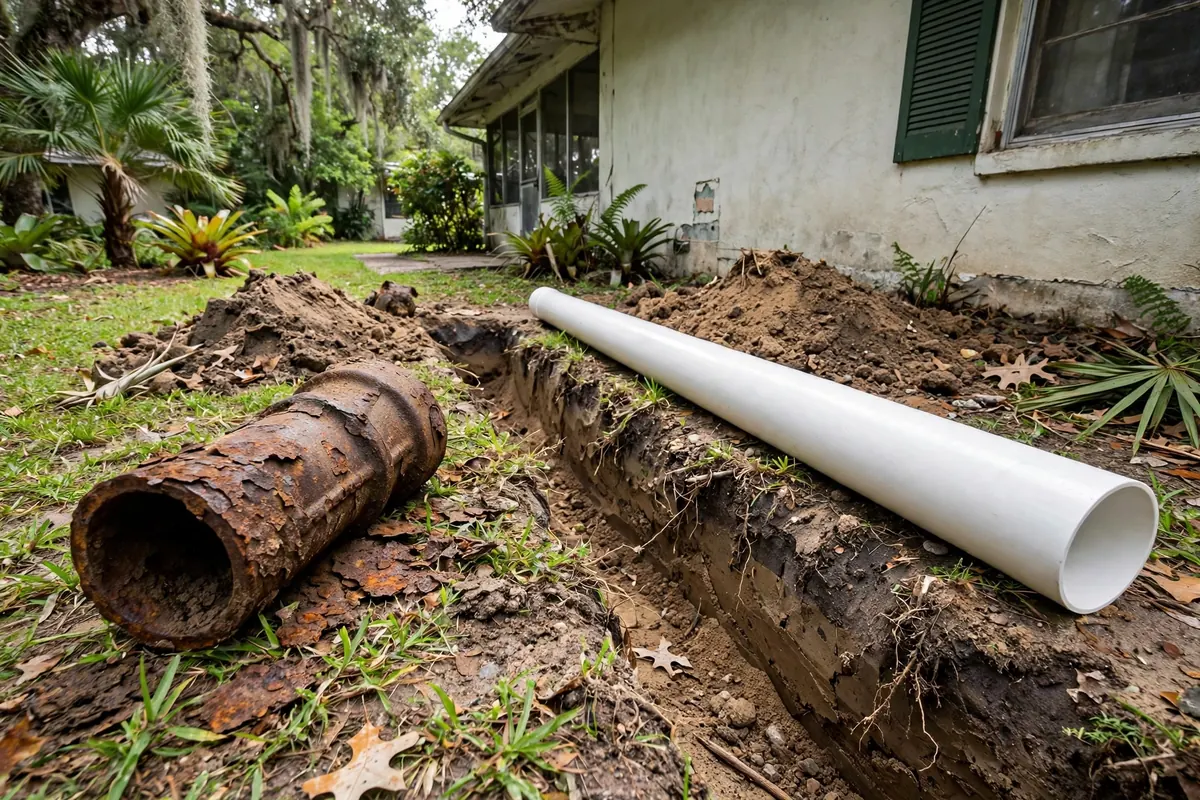
How Cast Iron Dies
Cast iron doesn't fail all at once. It rots from the inside out. Years of wastewater corrode the interior walls, building up rough scale that narrows the pipe. The bottom of the pipe corrodes fastest — wastewater sits there — until the pipe develops a channel, like a trough worn into the bottom. Eventually the wall gets thin enough to crack, break, or collapse.
On camera, dying cast iron is unmistakable: flaky orange-brown scale, rough walls, standing water in channeled sections, cracks you can see daylight through. If your Bradenton ranch was built in the 50s, 60s, or 70s and still has its original line, there's a good chance this is what's down there.
When Replacement Beats Repair
Not every old cast iron line needs replacement. If the pipe is scaled but structurally sound, descaling and milling can strip the buildup and buy the pipe many more years — sometimes followed by lining for a permanent fix. That's always worth checking first.
Replacement is the call when the camera shows the pipe is past saving: through-wall corrosion, channeling along the bottom, multiple cracks or breaks, or sections that have lost their shape. At that point, descaling just exposes how thin the walls are. We'll show you the footage and give you the straight answer — save it or replace it.
Your Replacement Options
Once replacement is the decision, you still have choices in how we do it:
- Pipe bursting — the trenchless route. Breaks the old cast iron apart underground and pulls in new HDPE. Two small pits, usually done in a day, landscaping intact.
- Traditional replacement — open trench. The right choice if the line is fully collapsed, has deep bellies needing re-grade, or runs too shallow for bursting equipment.
Either way, the old cast iron gets replaced with modern pipe — PVC or HDPE — that won't corrode. The material that failed you gets left in the past.
The Bradenton Cast Iron Belt
Bayshore Gardens is the textbook case: an entire neighborhood of 1950s–60s mid-century homes, all built around the same time, all with original cast iron or clay laterals hitting 60–70 years old at once. The same story plays out in west Bradenton's ranch neighborhoods, the older streets of Palmetto, and the 1960s–80s housing in Memphis and Samoset.
Our sandy soil and high water table don't help — moisture from outside and corrosion from inside attack the pipe from both directions. If your home is in that era and you've never had the line inspected, a camera inspection is the smartest money you can spend. Knowing is always better than guessing with cast iron.